
Abstract
The liver performs hundreds of essential functions, including metabolism of nutrients, processing of many substances, production of bile, and regulation of several metabolic processes. Ayurveda has traditionally used numerous plants to support digestion, metabolism and liver-related health. Modern research has investigated several of these herbs for antioxidant, anti-inflammatory and hepatoprotective properties, although the strength of evidence differs considerably from one plant to another.
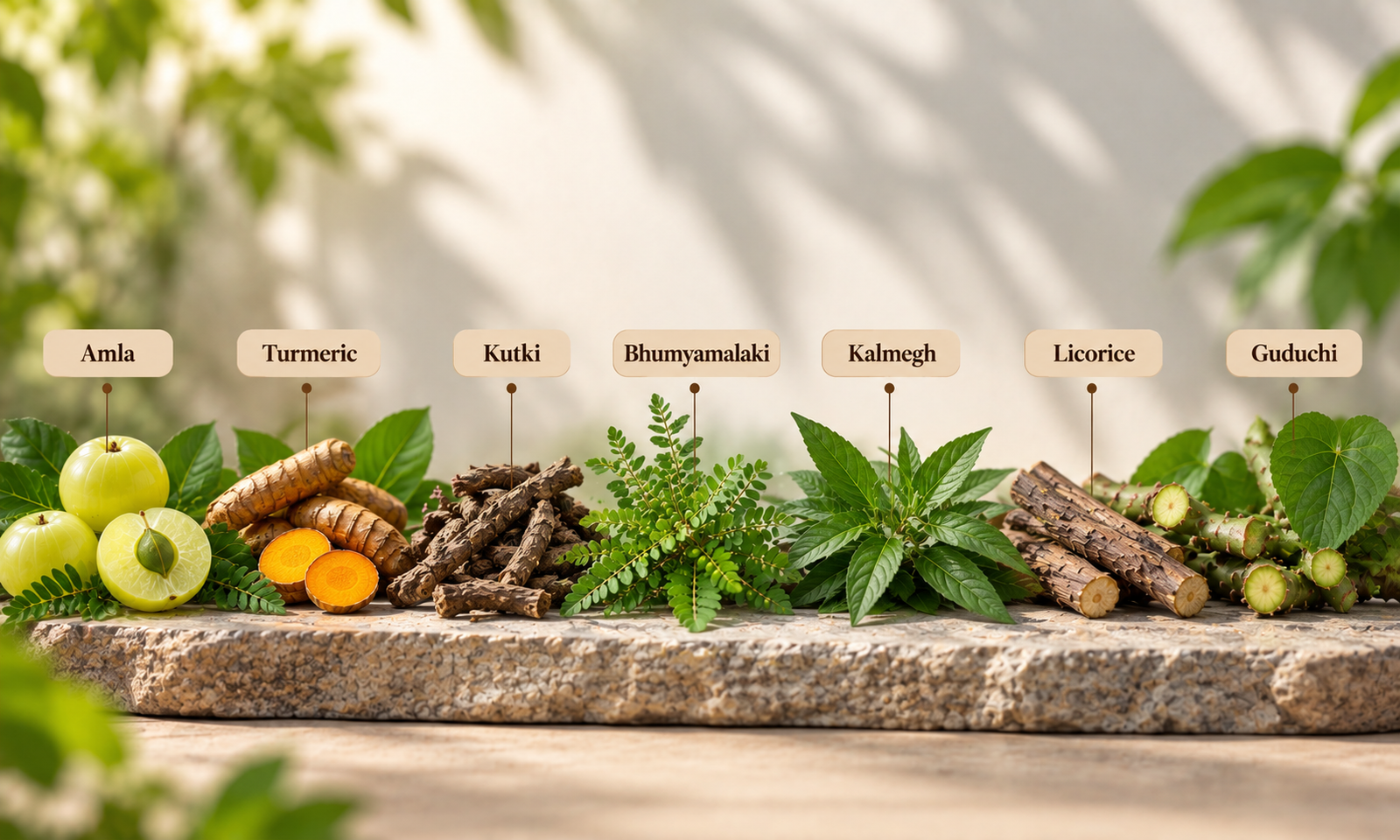
Among the Ayurvedic herbs most frequently discussed in liver-related research are Amla (Phyllanthus emblica), Turmeric (Curcuma longa), Kutki (Picrorhiza kurroa), Bhumyamalaki (Phyllanthus niruri), Kalmegh (Andrographis paniculata), Licorice (Glycyrrhiza glabra), and Guduchi (Tinospora cordifolia). Research includes laboratory studies, animal experiments, traditional-medicine reviews and, for some herbs, human clinical trials. However, evidence of a hepatoprotective effect does not automatically mean that an herb can prevent or treat liver disease in humans.
Current research also highlights the importance of product quality, correct botanical identification, dosage and safety monitoring. Some herbs traditionally associated with liver support have also been investigated in reports of adverse effects, making responsible use particularly important.
This article examines the scientific evidence surrounding seven commonly studied Ayurvedic herbs and explains what is currently known about their potential role in maintaining liver health.
Why Is Liver Health Important?
The liver is one of the body’s major metabolic organs. It participates in nutrient metabolism, bile production, processing of endogenous compounds and detoxification or biotransformation of many substances. Liver health is therefore closely connected with overall metabolic health.
Ayurveda has traditionally included a number of herbs in formulations intended to support digestion, metabolism and liver function. Modern pharmacological research has subsequently investigated some of these plants for antioxidant, anti-inflammatory and hepatoprotective activities. A review of medicinal plants used for liver diseases in Indian systems identified several botanicals, including Picrorhiza kurroa, Glycyrrhiza glabra and Phyllanthus species, as subjects of scientific investigation.
It is important, however, to distinguish between traditional use, laboratory evidence, animal research and clinical evidence in humans. A promising laboratory result does not automatically establish that an herb can prevent liver disease or reverse liver damage in people.
1. Amla (Phyllanthus emblica)
Amla, also known as Indian gooseberry and scientifically as Phyllanthus emblica, is one of the best-known plants in Ayurveda. It is used traditionally as both a food and medicinal plant and is particularly valued for its rich concentration of polyphenols and other bioactive compounds.
Research has investigated amla for antioxidant, anti-inflammatory, metabolic and hepatoprotective properties. A comprehensive review published in 2024 described a wide range of phytochemicals in P. emblica, including phenolic acids, tannins, flavonoids, sterols and triterpenoids, and summarized evidence for several biological activities, including hepatoprotective activity.
Earlier research has also reported protective effects of amla against several experimentally induced forms of liver injury. These findings have largely involved experimental models rather than definitive evidence that amla treats liver disease in humans.
For this reason, amla can reasonably be described as a promising traditional food and medicinal herb for liver-support research, but it should not be presented as a proven treatment for a specific liver disease.
2. Turmeric (Curcuma longa)
Turmeric (Curcuma longa) is another widely used Ayurvedic plant. Its major studied compound, curcumin, has attracted considerable scientific interest because of its antioxidant and anti-inflammatory activities.
Among the seven herbs discussed here, curcumin has one of the more substantial bodies of human clinical research concerning metabolic liver health. A 2025 GRADE-assessed systematic review and dose-response meta-analysis included 15 randomized controlled trials involving 905 participants with non-alcoholic fatty liver disease and reported significant reductions in ALT and AST with curcumin supplementation, although the authors also noted the need for better-designed trials.
Another 2024 systematic review and meta-analysis included 14 studies and reported reductions in ALT and AST, but substantial heterogeneity existed between studies.
The evidence therefore suggests potential benefit, particularly in metabolic liver conditions, but turmeric or curcumin should not be regarded as a replacement for medical treatment. Research has also frequently used standardized curcumin supplements, which are not necessarily equivalent to the amount of curcumin obtained from ordinary culinary turmeric.
3. Kutki (Picrorhiza kurroa)
Kutki, scientifically known as Picrorhiza kurroa, has a particularly strong traditional association with liver-related formulations in Ayurveda. Its important bioactive compounds include iridoid glycosides known as picrosides.
Research has investigated Kutki through experimental studies as well as human clinical research. A randomized, double-blind, placebo-controlled study published in the Journal of Postgraduate Medicine evaluated P. kurroa root powder in patients with acute viral hepatitis and reported differences in bilirubin and transaminase measures between the treatment and placebo groups over the study period.
A later comprehensive review examined the traditional use, phytochemistry, pharmacological activity, dosage and toxicity of P. kurroa. Another review specifically discussed its potential translational application in fatty liver disease while emphasizing the importance of phytochemical standardization, formal regulation and ethical prescribing.
These findings make Kutki an important subject of liver-health research, but the clinical evidence remains much smaller than the evidence base for conventional treatments of established liver disease.
4. Bhumyamalaki (Phyllanthus niruri)
Bhumyamalaki is a traditional Ayurvedic name associated with Phyllanthus species, particularly Phyllanthus niruri and related plants. The genus has been extensively investigated for its phytochemicals and potential hepatoprotective properties.
A 2024 review of the Phyllanthus genus identified numerous compounds, including lignans, alkaloids, terpenoids, flavonoids and tannins, and summarized experimental evidence for hepatoprotective and antioxidant activities.
Human evidence, however, is mixed. A double-blind randomized controlled trial involving patients with mild-to-moderate alcoholic hepatitis found that P. niruri did not significantly improve liver or renal function parameters over four weeks, although an increase in total antioxidant levels was observed.
A separate 12-month randomized controlled trial in chronic hepatitis B found no significant difference in viral outcomes and did not support the use of P. niruri as a treatment for chronic hepatitis B.
Therefore, Bhumyamalaki has interesting laboratory and traditional evidence, but claims that it can treat chronic liver disease should not be made without stronger clinical evidence.
5. Kalmegh (Andrographis paniculata)
Kalmegh, or Andrographis paniculata, is an important medicinal plant used in Indian traditional medicine. Its principal studied compound is andrographolide.
Research has investigated Kalmegh primarily for immune, inflammatory and infectious conditions, while experimental studies have also examined its hepatoprotective properties. In an animal study, extracts of A. paniculata provided protection against experimentally induced paracetamol-related liver injury, based on biochemical and histopathological measures.
Human safety data are more developed than human liver-efficacy data. A systematic review and meta-analysis of A. paniculata found that serious adverse events were rare with oral preparations, although non-serious adverse events, particularly gastrointestinal and skin-related effects, were reported.
Consequently, Kalmegh may be considered a scientifically interesting Ayurvedic herb with hepatoprotective experimental evidence, but its liver-specific benefits in healthy people remain insufficiently established.
6. Licorice (Glycyrrhiza glabra)
Licorice, or Glycyrrhiza glabra, has a long history of use in traditional medicine and contains glycyrrhizin as one of its major bioactive constituents. It has also been used traditionally in formulations associated with liver complaints.
Scientific literature has reported antioxidant, anti-inflammatory and other biological activities of licorice. Experimental research has demonstrated hepatoprotective effects of G. glabra extracts in models of chemically induced liver injury.
Glycyrrhizic acid has also been investigated for liver-related applications, particularly in Asian clinical research. A literature review described its anti-inflammatory and antiviral pharmacological properties and its development as a medicinal treatment for certain liver diseases.
However, licorice deserves particular attention regarding dosage and duration. Excessive glycyrrhizin intake can produce adverse effects, and toxicological reviews have documented potential health concerns associated with licorice.
Therefore, “natural” does not mean unlimited consumption is appropriate. The amount, formulation and duration of use matter.
7. Guduchi (Tinospora cordifolia)
Guduchi, also known as Giloy and scientifically identified as Tinospora cordifolia, is one of the most widely recognized Ayurvedic medicinal plants. It has traditionally been used for several purposes, including immune and metabolic support, and has also been described as hepatoprotective.
Guduchi is included here with an important safety qualification because its relationship with liver injury has been the subject of substantial scientific discussion.
A multicenter Indian study published in Hepatology Communications reported 43 cases of liver injury temporally associated with consumption of Tinospora cordifolia products during the COVID-19 period. The study investigated clinical features as well as the botanical identity and composition of recovered samples.
At the same time, other researchers have argued that species misidentification, substitution and adulteration may complicate interpretation of some reported cases. A detailed review emphasized that Tinospora crispa and other species can be confused with T. cordifolia and highlighted the importance of botanical authentication and pharmacovigilance.
This disagreement is scientifically important: it means Guduchi should neither be automatically described as dangerous nor assumed to be risk-free. Correct botanical identification, manufacturing quality and appropriate professional guidance are particularly important.
How Should These Herbs Be Used for Liver Health?
The evidence does not support the idea that taking several liver herbs simultaneously is necessary for maintaining a healthy liver. Herbal products can contain concentrated extracts and multiple ingredients, and their effects can differ substantially from those of the whole food or plant.
A healthy liver is supported primarily by evidence-based lifestyle and medical measures, including maintaining a healthy body weight, eating a balanced diet, limiting alcohol exposure, avoiding unnecessary medicines or supplements, controlling metabolic risk factors and seeking medical evaluation when liver abnormalities are detected.
Herbal products should therefore be viewed as complementary options rather than automatic substitutes for diagnosis or treatment. The quality of the product also matters. WHO emphasizes the importance of regulation, quality control, contaminant testing, good manufacturing practices and pharmacovigilance for traditional and herbal medicines.
This is particularly relevant to products marketed as an ayurvedic medicine for liver health or a Herbal liver detox formula. The term “detox” can create the impression that the liver requires periodic cleansing, whereas the liver already performs its own metabolic and detoxification functions. A responsible herbal product description should therefore focus on the specific ingredients, traditional use, available evidence and appropriate safety information rather than promising to “flush” or “clean” the liver.
For anyone considering a Herbal Unani liver tonic or an Ayurvedic formulation, the same principle applies: the evidence should be assessed for the actual ingredients and formulation, not simply for the traditional system under which the product is marketed.
Shahi Herbal can use this evidence-based approach when communicating about herbal liver-support products: describe traditional uses accurately, distinguish laboratory findings from human clinical evidence, avoid disease-treatment promises that are not supported by clinical research, and provide appropriate information about dosage, contraindications and professional consultation.
Reference
- Rui W, et al. Phyllanthus emblica Linn: A comprehensive review of botany, traditional uses, phytonutrients, health benefits, quality markers, and applications. Food Chemistry. 2024. DOI: 10.1016/j.foodchem.2024.138891. PMID: 38432135.
- Vajdi M, Hassanizadeh S, Hassanizadeh R, Bagherniya M. Curcumin supplementation effect on liver enzymes in patients with nonalcoholic fatty liver disease: a GRADE-assessed systematic review and dose-response meta-analysis of randomized controlled trials. Nutrition Reviews. 2025;83(1):1–12. DOI: 10.1093/nutrit/nuad166. PMID: 38213188.
- Ebrahimzadeh A, et al. Therapeutic effects of curcumin supplementation on liver enzymes of nonalcoholic fatty liver disease patients: A systematic review and meta-analysis of randomized clinical trials. Food Science & Nutrition. 2025;13(1). DOI: 10.1002/fsn3.4144. PMID: 39803230. PMCID: PMC11716989.
- Vaidya AB, et al. Picrorhiza kurroa (Kutaki) Royle ex Benth as a hepatoprotective agent—experimental & clinical studies. Journal of Postgraduate Medicine. 1996;42(4):105–108. PMID: 9715310.
- Bhandari P, et al. Picrorhiza kurroa, Royle ex Benth: Traditional uses, phytopharmacology, and translational potential in therapy of fatty liver disease. Journal of Ayurveda and Integrative Medicine. 2022. DOI: 10.1016/j.jaim.2022.100558. PMID: 35659739. PMCID: PMC10105242.
- Sowjanya K, et al. Efficacy of Phyllanthus niruri on improving liver functions in patients with alcoholic hepatitis: A double-blind randomized controlled trial. Indian Journal of Pharmacology. 2021;53(6):448–456. DOI: 10.4103/ijp.IJP_540_20. PMID: 34975132. PMCID: PMC8764976.
- Baiguera C, et al. Phyllanthus niruri versus Placebo for Chronic Hepatitis B Virus Infection: A Randomized Controlled Trial. 2018;25(6):376–382. DOI: 10.1159/000484927. PMID: 30372693.
- Nagral A, et al. Can Guduchi (Tinospora cordifolia), a well-known ayurvedic hepato-protectant cause liver damage? 2022. PMID: 36400639.
- Kulkarni AV, et al. Tinospora Cordifolia (Giloy)-Induced Liver Injury During the COVID-19 Pandemic—Multicenter Nationwide Study From India. Hepatology Communications. 2022;6(6):1289–1300. DOI: 10.1002/hep4.1904. PMID: 35037744. PMCID: PMC9134809.
- Lekshmi N, et al. Hepatoprotective activity of Andrographis paniculata and Swertia chirayita. Food and Chemical Toxicology. 2011. DOI: 10.1016/j.fct.2011.09.026. PMID: 21983487.
- Saokaew S, et al. Safety of Andrographis paniculata: A systematic review and meta-analysis. 2021. PMID: 33372366.
- Pastorino G, et al. Liquorice (Glycyrrhiza glabra): A phytochemical and pharmacological review. 2018. PMCID: PMC7167772. PMID: 30117204.
- Nazari S, Rameshrad M, Hosseinzadeh H. Toxicological Effects of Glycyrrhiza glabra (Licorice): A Review. Phytotherapy Research. 2017. DOI: 10.1002/ptr.5893. PMID: 28833680.
- World Health Organization. WHO Global Report on Traditional, Complementary and Integrative Medicine 2024. Published 2025. WHO reference publication.
- World Health Organization. Traditional Medicine: Questions and Answers. Information on safety, quality control, regulation and pharmacovigilance of traditional and herbal medicines.
Keywords: ayurvedic medicine for liver health, Herbal liver detox formula, Herbal Unani liver tonic, Shahi Herbal, Ayurvedic herbs for liver, herbs for healthy liver, Ayurvedic liver herbs, natural liver support, liver health, herbal liver support


