
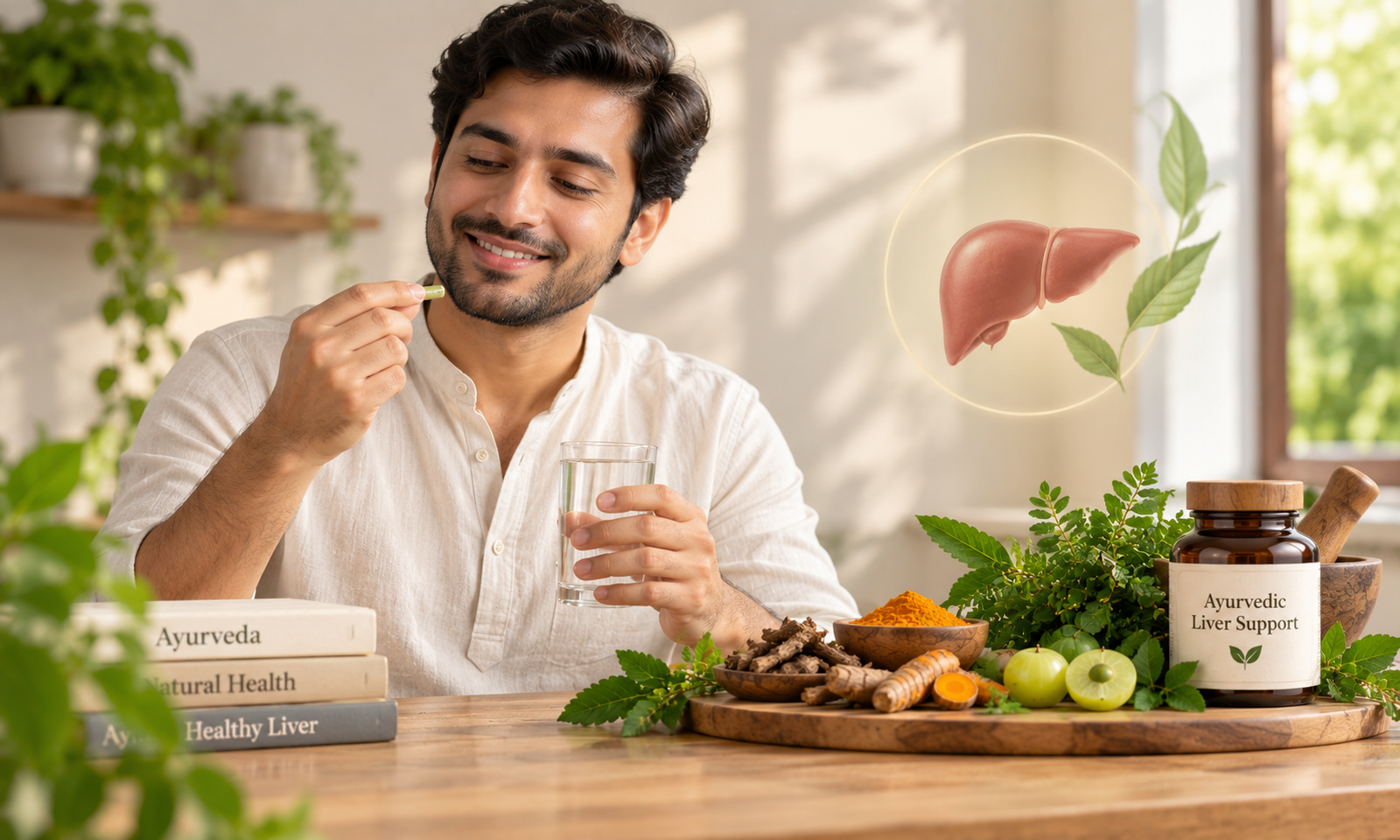
Abstract
Alcohol is metabolized primarily by the liver, and repeated or heavy alcohol consumption can place substantial stress on hepatic cells. Depending on the amount and duration of alcohol exposure, liver injury can range from temporary fat accumulation to alcohol-associated hepatitis, fibrosis and cirrhosis. Although Ayurveda has traditionally used several herbs for liver and digestive support, there is currently no strong clinical evidence that an Ayurvedic herb can “detox” the liver immediately after alcohol consumption or reverse alcohol-induced liver damage on its own.
The most important evidence-based step for liver recovery is reducing or stopping alcohol exposure. In people with alcohol-associated liver disease, abstinence is strongly associated with improved outcomes and can allow alcohol-related steatosis to improve. Nutrition and management of associated metabolic and medical problems are also important.
Some Ayurvedic herbs, including amla, turmeric, Kutki and Bhumyamalaki, have been investigated for antioxidant or hepatoprotective properties. However, evidence varies substantially between herbs, and some herbal products themselves have been associated with liver injury. Therefore, herbal remedies should not be assumed to be automatically safe, particularly when used in concentrated extracts or multi-herb formulations.
This article examines what is currently known about Ayurvedic approaches to liver support following alcohol exposure while distinguishing traditional use from evidence obtained through human clinical research.
How Alcohol Affects the Liver
The liver is the principal organ responsible for metabolizing alcohol. During alcohol metabolism, ethanol is converted into acetaldehyde and subsequently into acetate. These metabolic processes can alter the liver’s redox balance and contribute to oxidative stress, inflammation and changes in fat metabolism.
Repeated heavy alcohol exposure can therefore cause a spectrum of alcohol-associated liver disease (ALD), beginning with hepatic steatosis and potentially progressing to alcohol-associated hepatitis, fibrosis and cirrhosis. The American College of Gastroenterology’s 2024 clinical guideline describes alcohol-associated liver disease as a spectrum in which continued alcohol exposure is an important determinant of long-term outcomes.
The National Institute on Alcohol Abuse and Alcoholism also notes that abstinence is associated with improved prognosis across stages of alcohol-associated liver disease. In alcohol-related steatosis, stopping alcohol can allow the liver to recover, while continued abstinence in more advanced disease can reduce further injury and improve survival.
This is important because the idea of taking an herbal preparation after drinking can create a misleading impression that the effects of alcohol can simply be “cancelled out.” There is no established Ayurvedic remedy that makes continued alcohol consumption safe.
The Most Important “Natural Remedy”: Stop Further Alcohol Exposure
When the objective is to improve liver health after alcohol consumption, the most important intervention is not a particular herb—it is reducing or eliminating further alcohol exposure.
The 2024 ACG Clinical Guideline identifies alcohol abstinence as a crucial determinant of long-term outcomes in alcohol-associated liver disease.
NIAAA similarly states that abstinence is the safest course for people with liver disease.
This does not mean that everyone who has consumed alcohol has liver disease. Occasional consumption and chronic heavy alcohol use have very different risk profiles. However, people who already have fatty liver, abnormal liver tests, hepatitis, fibrosis or cirrhosis should discuss alcohol use with a qualified healthcare professional rather than relying on an herbal product to protect the liver.
For someone with alcohol-associated liver disease or alcohol use disorder, professional support may also be necessary. Stopping heavy alcohol consumption abruptly can cause dangerous withdrawal in some individuals, so people with a history of heavy or dependent drinking should seek medical advice rather than attempting unsupervised withdrawal.
Can Ayurvedic Herbs Support Liver Function?
Ayurvedic medicine has traditionally used a variety of plants for liver and digestive health. Modern research has investigated several of these plants for antioxidant, anti-inflammatory and hepatoprotective effects.
However, an important distinction must be made between hepatoprotective activity in laboratory or animal models and proven clinical benefit in humans.
For example, turmeric and curcumin have been evaluated in randomized clinical trials and meta-analyses, with some studies reporting modest improvements in liver enzymes. A GRADE-assessed meta-analysis of 31 randomized controlled trials found that turmeric/curcumin supplementation reduced ALT and AST, but the authors rated the certainty of evidence as low for these outcomes and noted that statistically significant changes do not necessarily establish clinical effectiveness.
Therefore, herbs may be scientifically interesting as complementary approaches, but they should not be marketed as guaranteed “liver cleansers.”
Amla: A Traditional Source of Antioxidants
Amla (Phyllanthus emblica), also known as Indian gooseberry, is widely used in Ayurveda and as a food. It contains vitamin C and numerous polyphenolic compounds and has been investigated for antioxidant and metabolic effects.
Human research has provided some safety and metabolic data. In a randomized, double-blind, crossover placebo-controlled study involving 15 healthy adults, participants received 500 mg of amla per day for 18 weeks. The researchers evaluated several biomarkers, including liver-related safety parameters, and reported improvements in some metabolic and oxidative-stress measures without evidence of hepatotoxicity during the study period.
However, this was a small study in healthy people and was not designed to demonstrate that amla reverses alcohol-induced liver injury.
Amla can therefore be described as a traditional fruit with promising nutritional and antioxidant properties, but not as a clinically proven treatment for alcohol-associated liver disease.
Turmeric and Curcumin
Turmeric (Curcuma longa) is another widely studied Ayurvedic plant. Curcumin, one of its principal bioactive compounds, has been investigated extensively for antioxidant and anti-inflammatory effects.
A randomized double-blind clinical trial in patients with non-alcoholic fatty liver disease reported reductions in ALT, AST and GGT following turmeric supplementation, although liver ultrasound grading did not significantly change.
A broader meta-analysis of 31 randomized controlled trials found modest improvements in ALT and AST with turmeric/curcumin supplementation but emphasized that the clinical significance and evidence quality remain uncertain.
These studies are relevant to metabolic liver health, but they do not establish that taking turmeric after drinking alcohol prevents alcohol-induced liver damage.
There is also an important safety consideration. Although turmeric is commonly consumed as a food, concentrated turmeric/curcumin supplements have been implicated in cases of liver injury. A 2024 review of hepatotoxicity associated with Indian traditional medicines specifically identified turmeric among herbs for which liver-injury reports have emerged.
Therefore, “natural” should not be interpreted as “risk-free,” especially when concentrated extracts are involved.
Kutki: A Traditionally Used Hepatoprotective Herb
Kutki (Picrorhiza kurroa) has a particularly strong traditional association with liver health. Its rhizomes contain iridoid glycosides such as picroside I and picroside II.
Experimental research has investigated Kutki for antioxidant and hepatoprotective effects, while older human research has also examined its use in specific liver conditions.
However, evidence from studies of Kutki should not be extrapolated to the idea that it can reverse the effects of alcohol immediately after drinking. Human clinical studies have generally investigated particular preparations, doses and disease conditions rather than post-alcohol “detoxification.”
This distinction is particularly important for an Herbal liver detox formula. A formulation containing Kutki may be traditionally positioned for liver support, but its safety and effectiveness depend on the actual formulation, dosage, manufacturing quality and clinical evidence.
Bhumyamalaki and Phyllanthus Species
Bhumyamalaki is a traditional Ayurvedic name associated with several small Phyllanthus plants. Research on Phyllanthus niruri, P. amarus and related species has examined their antioxidant and hepatoprotective properties.
Clinical evidence, however, is mixed.
For example, a double-blind randomized controlled trial involving people with mild-to-moderate alcoholic hepatitis found that P. niruri did not significantly improve liver or renal function parameters compared with placebo after four weeks, although total antioxidant levels increased.
This is particularly relevant to the present topic because it involved an alcohol-associated liver condition. The results demonstrate why traditional reputation should not be confused with proven clinical efficacy.
Bhumyamalaki therefore remains a scientifically interesting herb, but current evidence does not justify claiming that it can repair alcohol-related liver damage.
Nutrition After Alcohol Exposure
Herbs are only one small part of liver-health management.
Alcohol-associated liver disease is frequently accompanied by nutritional problems. AASLD notes that malnutrition and micronutrient deficiencies are common in people with alcohol-associated liver disease because alcohol can displace nutritious foods, interfere with digestion and absorption, and contribute to metabolic disturbances.
For people with established alcohol-associated liver disease, adequate nutritional intake is therefore important. AASLD educational guidance emphasizes adequate calories and protein and discourages prolonged fasting in patients with significant liver disease.
For the general population, this translates into a simple principle: after alcohol exposure, focus on balanced meals containing adequate protein, vegetables, fruits, whole grains and other nutrient-dense foods rather than relying on a “detox” drink or herbal preparation.
Adequate hydration is also sensible, particularly after alcohol consumption, although drinking water does not accelerate the enzymatic breakdown of alcohol or eliminate liver injury.
What About Herbal “Detox” Products?
The term “detox” is widely used in the herbal supplement market, but it can be misleading.
The liver already performs complex metabolic and detoxification functions. There is no established clinical requirement for periodic liver cleansing after consuming alcohol.
More importantly, adding multiple concentrated herbal ingredients can introduce additional risks. A systematic review of herb-induced liver injury found that herbal products can account for a substantial proportion of reported drug- and supplement-associated liver injury cases, with some products causing severe disease.
Reviews specifically examining Ayurvedic medicines have also documented liver injury associated with certain herbs, contamination, adulteration, herb–herb interactions and herb–drug interactions.
This means that a multi-ingredient Herbal liver detox formula should not be assumed to be safer than an individual herb simply because it contains several traditional ingredients.
When Should Someone Seek Medical Attention?
Occasional alcohol consumption does not automatically mean that liver damage has occurred. However, certain symptoms following substantial or repeated alcohol exposure should not be managed with herbal remedies alone.
Medical evaluation is particularly important when someone develops yellowing of the skin or eyes, persistent vomiting, severe abdominal pain, unusual swelling of the abdomen or legs, confusion, significant drowsiness, gastrointestinal bleeding, dark urine or unexplained severe weakness.
Alcohol-associated hepatitis can present with jaundice and hepatic dysfunction and may be medically serious. NIAAA notes that severe alcohol-associated hepatitis can have substantial short-term mortality, making early medical assessment important.
People with known liver disease should also have appropriate monitoring rather than attempting to determine liver recovery solely through symptoms.
How Should Ayurvedic Liver Support Be Approached?
A responsible approach combines traditional knowledge with established medical evidence.
An individual interested in ayurvedic medicine for liver health can consider herbs with documented traditional use and emerging scientific research, but should first address the factors known to have the strongest effect on liver outcomes: alcohol cessation or reduction when appropriate, adequate nutrition, healthy body weight, physical activity and management of metabolic conditions.
A product such as a Herbal Unani liver tonic should likewise be evaluated according to its actual ingredients and clinical evidence rather than assuming that all traditional liver tonics have equivalent effects.
For Shahi Herbal, evidence-based communication is especially important. A liver-support product can be described in terms of its traditional ingredients, nutritional or botanical characteristics and available research, while avoiding claims that it can neutralize alcohol, reverse cirrhosis, cure alcoholic hepatitis or “clean” the liver after drinking.
The most scientifically defensible message is that certain Ayurvedic herbs are being investigated for liver-supportive properties, but no herbal remedy currently replaces alcohol abstinence, appropriate nutrition, medical evaluation or evidence-based treatment for alcohol-associated liver disease.
Reference
- Jophlin LL, Singal AK, Bataller R, et al. ACG Clinical Guideline: Alcohol-Associated Liver Disease. American Journal of Gastroenterology. 2024;119(1):30–54. DOI: 10.14309/ajg.0000000000002572; PMID: 38174913; PMCID: PMC11040545.
- European Association for the Study of the Liver. EASL Clinical Practice Guidelines: Management of alcohol-related liver disease. Journal of Hepatology. 2018;69(1):154–181. DOI: 10.1016/j.jhep.2018.03.018; PMID: 29628280.
- National Institute on Alcohol Abuse and Alcoholism (NIAAA). Medical Complications: Common Alcohol-Related Concerns. Current clinical resource covering alcohol-associated liver disease and the importance of abstinence.
- American Association for the Study of Liver Diseases (AASLD). Why is Nutrition So Important in Alcohol Associated Liver Disease? Clinical educational resource addressing malnutrition, nutrient deficiencies and nutritional management in ALD.
- Rahmani AH, et al. Effects of curcumin/turmeric supplementation on liver function in adults: A GRADE-assessed systematic review and dose-response meta-analysis of randomized controlled trials. Complementary Therapies in Medicine. 2023;74:102952. DOI: 10.1016/j.ctim.2023.102952; PMID: 37178581.
- The effect of turmeric on lipid profile, malondialdehyde, liver echogenicity and enzymes among patients with nonalcoholic fatty liver disease: a randomized double blind clinical trial. PMID: 34663438.
- Clinical evaluation of Emblica officinalis Gaertn (Amla) in healthy human subjects: Health benefits and safety results from a randomized, double-blind, crossover placebo-controlled study. PMID: 31890983.
- Sowjanya K, Girish C, Bammigatti C, et al. Efficacy of Phyllanthus niruri on improving liver functions in patients with alcoholic hepatitis: A double-blind randomized controlled trial. Indian Journal of Pharmacology. 2021;53(6):448–456. PMID: 34975132; PMCID: PMC8764976.
- Philips CA, Ahamed R, Rajesh S, et al. Comprehensive review of hepatotoxicity associated with traditional Indian Ayurvedic herbs. World Journal of Hepatology. 2020;12(9):574–595. DOI: 10.4254/wjh.v12.i9.574; PMID: 33033566.
- Philips CA, Theruvath AH. A comprehensive review on the hepatotoxicity of herbs used in the Indian (Ayush) systems of alternative medicine. Medicine. 2024;103(16). DOI: 10.1097/MD.0000000000037903; PMID: 38640296; PMCID: PMC11029936.
- Suk KT, Kim DJ. Hepatotoxicity of herbal and dietary supplements: an update. World Journal of Hepatology. 2012. PMID: 23121117.
- Zheng EZ, Sandhu N, Navarro V. Drug-induced Liver Injury Secondary to Herbal and Dietary Supplements. Clinics in Liver Disease. 2020;24(1):141–155. DOI: 10.1016/j.cld.2019.09.009; PMID: 31753247.
- Suk KT, Kim DJ. Systematic review of published data on herb induced liver injury. Journal of Ethnopharmacology. 2019. DOI: 10.1016/j.jep.2019.01.006; PMID: 30639232.
Keywords: ayurvedic medicine for liver health, Herbal liver detox formula, Herbal Unani liver tonic, Shahi Herbal, Ayurvedic remedies for liver, liver health after alcohol consumption, Ayurvedic liver support, herbs for liver health, alcohol and liver health, natural liver support, herbal liver care, liver detox after alcohol


