
Abstract
The liver is one of the body’s most metabolically active organs, performing essential functions in digestion, nutrient processing, bile production, storage, and the metabolism of drugs and potentially harmful substances. Modern lifestyles characterised by sedentary behaviour, calorie-dense diets, excessive sugar consumption, alcohol intake, irregular sleep, and metabolic disorders can contribute to an increased risk of liver-related conditions, particularly metabolic dysfunction-associated steatotic liver disease (MASLD). As awareness of liver health grows, many people are exploring traditional herbal approaches, including Unani medicine, as complementary options for maintaining wellness.
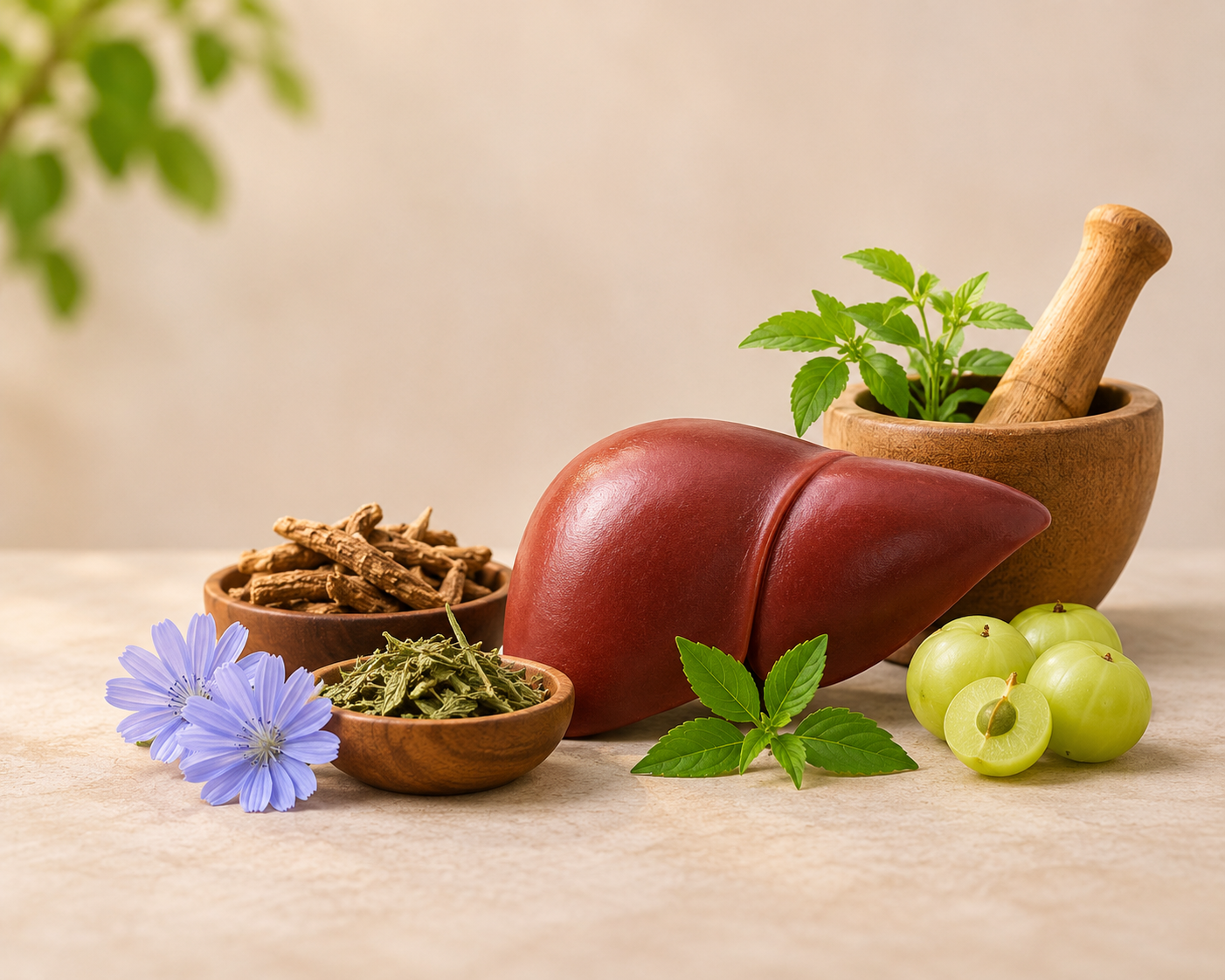
Unani medicine has historically emphasised the role of the liver in digestion, metabolism, and the maintenance of physiological balance. Various herbs, including Kasni (chicory), Kalmegh, Bhumyamalaki, Amla, and other botanicals, have traditionally been incorporated into formulations intended to support hepatic and digestive functions. Modern experimental research has investigated several of these herbs for their antioxidant, anti-inflammatory, and hepatoprotective properties. However, the strength of evidence varies considerably between herbs, with some findings derived primarily from laboratory and animal experiments and others explored in preliminary human trials.
This article examines the traditional principles behind Unani liver tonics, their relevance to contemporary lifestyles, and the scientific evidence investigating herbal ingredients associated with liver wellness. It also addresses the limitations of the popular concept of liver detoxification, the importance of lifestyle interventions, and safety considerations associated with herbal formulations. Understanding the relationship between traditional knowledge and modern scientific research can help individuals make more informed decisions about herbal liver support without overlooking the importance of medical evaluation and evidence-based healthcare.
1. Understanding Liver Health in Modern Lifestyles
1.1 The Liver: A Central Organ of Metabolism
The liver is responsible for hundreds of physiological processes essential to maintaining health. It metabolises carbohydrates, proteins, and fats, regulates the storage and release of glucose, synthesises important proteins, produces bile, and processes numerous medications and substances absorbed from the digestive tract. Its enzymatic systems transform chemicals into compounds that can subsequently be eliminated through bile or urine.
The liver also plays an important role in maintaining metabolic balance. When dietary nutrients are consumed in excess, particularly in the context of insulin resistance, the liver may accumulate fat. Over time, excessive fat accumulation can be accompanied by inflammation and tissue injury in susceptible individuals, potentially progressing to fibrosis and more advanced liver disease.
1.2 How Modern Lifestyle Habits Affect the Liver
Contemporary lifestyles can expose the liver to several metabolic challenges. Frequent consumption of sugary beverages, highly processed foods, excess calories, and diets rich in unhealthy fats may contribute to weight gain and metabolic dysfunction. Physical inactivity can further aggravate insulin resistance, increasing the likelihood of fat accumulation within liver cells.
Alcohol consumption represents another important factor, as alcohol and its metabolites can directly affect hepatic cells. Certain medications, excessive or inappropriate supplement use, and exposure to toxic substances can also cause liver injury.
Metabolic dysfunction-associated steatotic liver disease (MASLD), previously commonly referred to as non-alcoholic fatty liver disease (NAFLD), is particularly relevant today. It is associated with obesity, type 2 diabetes, abnormal blood lipids, and other metabolic risk factors. Importantly, liver disease may develop silently, without obvious symptoms during its early stages.
This is why liver wellness cannot be reduced to taking a tonic or following a short-term detoxification programme. Sustainable dietary habits, regular physical activity, appropriate weight management, and medical evaluation when indicated remain central to protecting liver health.
1.3 The Traditional Unani Perspective on Liver Wellness
In Unani medicine, the liver is regarded as an important organ involved in digestion, nourishment, metabolism, and the formation and distribution of substances necessary for the body. Traditional approaches to hepatic wellness have generally involved herbal formulations, dietary regulation, and measures intended to maintain physiological balance.
Herbs such as Kasni, Kalmegh, Amla, and other medicinal plants have historically been used in preparations associated with liver and digestive health. Their selection in traditional formulations often reflects properties such as bitterness, digestive support, and their perceived ability to promote balance within the body.
A Herbal Unani liver tonic is generally understood as a compound formulation containing selected medicinal ingredients intended to support liver-related and digestive functions. However, traditional use and modern clinical evidence are different forms of knowledge. The historical use of a herb may provide a starting point for scientific investigation, but it does not independently establish its efficacy for treating hepatitis, fatty liver disease, cirrhosis, or other medical conditions.
2. Herbal Liver Tonics and the Emerging Scientific Evidence
2.1 Kasni (Cichorium intybus): A Traditional Liver-Supporting Herb
Kasni, botanically identified as Cichorium intybus, is widely recognised in traditional medicine and is particularly associated with digestive and liver-supportive formulations. Its chemical constituents include phenolic compounds and other phytochemicals that have attracted research interest for their antioxidant and biological activities.
Experimental studies have investigated chicory extracts in models of liver injury. In a 2023 preclinical study, researchers examined chicory extract in rats with experimentally induced acute liver injury and hyperlipidaemia. The treatment was associated with improvements in certain liver enzymes, bilirubin, glucose, and lipid parameters. However, the researchers emphasised that clinical trials would be necessary to establish its effectiveness in human patients [1].
Another experimental study published in 2021 investigated hydroalcoholic chicory extract in rats with obstructive cholestasis. Researchers observed reductions in several biochemical markers associated with liver injury and inflammation, including ALT, AST, TNF-α, and nitric oxide [2].
These studies provide a scientific basis for further investigating Kasni as a potential hepatoprotective botanical. Nevertheless, the findings are experimental and should not be interpreted as proof that chicory preparations can prevent or treat liver disease in humans.
2.2 Bhumyamalaki (Phyllanthus niruri): Investigating Traditional Liver Applications
Bhumyamalaki is another herb frequently associated with traditional approaches to liver health. Plants belonging to the Phyllanthus genus have been investigated for their biological activities, including effects on oxidative stress, inflammation, and viral-related mechanisms.
A randomized, double-blind, placebo-controlled trial published in 2021 investigated Phyllanthus niruri in patients with alcoholic hepatitis. The study assessed liver and renal parameters alongside antioxidant measures over a four-week period. Although antioxidant levels and appetite-related outcomes showed some improvement, significant improvements in liver and renal function parameters were not demonstrated [3].
This distinction is important when evaluating herbal liver products. A plant may demonstrate antioxidant activity or influence certain biological markers without necessarily producing clinically meaningful improvements in liver disease. The results of a study involving one Phyllanthus species, preparation, and dosage also cannot automatically be applied to every product containing Bhumyamalaki.
2.3 Other Herbal Ingredients and Their Potential Biological Roles
Traditional liver formulations may contain several additional herbs, each investigated for different biological properties.
- Kalmegh (Andrographis paniculata): Investigated for its phytochemical constituents and potential antioxidant and anti-inflammatory activities.
- Amla (Phyllanthus emblica): Contains polyphenols and other antioxidant compounds and has been studied in relation to oxidative stress and metabolic health.
- Turmeric (Curcuma longa): Curcumin has been investigated for its effects on inflammatory signalling and oxidative processes.
- Giloy (Tinospora cordifolia): Traditionally used for several wellness purposes, but its safety profile requires particular attention because cases of liver injury associated with its use have been reported.
The presence of several herbs in a formulation may provide a broad range of phytochemicals, but it also makes scientific evaluation more complicated. Each ingredient may have different pharmacological properties, interactions, absorption characteristics, and safety considerations.
2.4 What Is a Herbal Liver Detox Formula?
The term Herbal liver detox formula is widely used in wellness marketing. It generally describes a formulation containing herbs traditionally associated with digestion, liver wellness, or the body’s normal metabolic processes.
However, the liver does not require periodic cleansing in healthy individuals. It continuously processes nutrients, medications, alcohol, and metabolic waste through highly regulated biochemical pathways. There is no established scientific evidence that commercial detox products can flush accumulated toxins from a healthy liver or rapidly restore damaged liver tissue.
A more scientifically appropriate way to understand herbal liver formulations is as traditional or complementary products that may contain ingredients being investigated for specific biological effects. Their usefulness depends on the exact formulation, ingredient quality, dose, safety, and the condition for which they are being used.
2.5 Exploring Traditional Herbal Formulations
For individuals interested in traditional herbal wellness, compound formulations may offer a convenient way to explore established herbal practices. Shahi Herbal’s Livosha M is a Unani formulation marketed within its digestive-care range and positioned for liver-related wellness.
<text color=”secondary” size=”sm”>Product information should be evaluated independently of scientific evidence on individual herbs. Research on a botanical ingredient does not establish the clinical effectiveness of a finished multi-ingredient formulation.</text>
Individuals considering a herbal formulation should review its ingredient list, recommended usage, manufacturing information, and safety considerations. Those with existing liver conditions or taking regular medications should seek professional guidance before using herbal products.
3. Supporting Liver Health Naturally: Safety, Lifestyle, and Practical Considerations
3.1 Lifestyle Habits That Matter Most
Herbal preparations should never overshadow the lifestyle factors that play a significant role in liver health.
Maintain a balanced diet: Include vegetables, fruits, whole grains, legumes, and suitable protein sources. Reduce excessive intake of sugary drinks, refined carbohydrates, highly processed foods, and excess calories.
Stay physically active: Regular exercise supports metabolic health, improves insulin sensitivity, and helps manage body weight. Walking, cycling, swimming, or other moderate activities can be incorporated into daily routines.
Maintain a healthy body weight: For individuals with excess body weight and fatty liver, gradual and sustained weight reduction may improve hepatic fat accumulation and metabolic risk factors.
Limit alcohol consumption: Alcohol can contribute to liver injury, particularly when consumption is frequent or excessive. Avoiding alcohol is especially important for people diagnosed with alcohol-related liver disease.
Prioritise sleep: Consistent sleep routines support general metabolic health and help maintain a sustainable lifestyle.
These habits address important contributors to liver disease and provide a more meaningful foundation for long-term liver wellness than relying on short-term detox programmes.
3.2 Safety Considerations Before Using Herbal Liver Tonics
Herbal products are not automatically harmless simply because their ingredients are natural. Some botanicals may interact with prescription medications, affect metabolism, or cause adverse reactions. Certain herbal preparations have also been associated with herb-induced liver injury.
A 2026 clinical investigation analysing 386 complementary and alternative medicine products associated with adverse events in patients at a tertiary centre in South India identified heavy-metal contamination and pharmaceutical adulteration in a number of products [4]. The study highlights the importance of product quality, proper labelling, and manufacturing oversight.
Before using an herbal liver tonic, consider the following:
- Verify the complete ingredient list.
- Avoid products with unclear composition or exaggerated claims.
- Do not combine multiple herbal supplements without professional guidance.
- Consult a qualified healthcare professional if you have liver disease, diabetes, or take regular medication.
- Avoid self-treatment for jaundice, persistent abdominal pain, unexplained fatigue, or abnormal liver test results.
- Seek medical attention if symptoms such as yellowing of the eyes, dark urine, persistent nausea, or unusual weakness develop.
Herbal preparations should not replace diagnostic testing or prescribed treatment for hepatitis, fatty liver disease, cirrhosis, or other hepatic conditions.
3.3 A Balanced Approach to Liver Wellness
The growing interest in ayurvedic medicine for liver health and traditional Unani formulations reflects a broader desire to incorporate natural approaches into modern wellness routines. Traditional herbal knowledge offers an important area for scientific investigation, and experimental research continues to explore the biological properties of many medicinal plants.
Nevertheless, responsible liver care requires an approach that combines scientific evidence, traditional knowledge, lifestyle practices, and appropriate healthcare. Herbal formulations may be considered complementary wellness options, but their benefits should not be overstated and their safety should never be assumed.
The liver is remarkably capable of performing its functions when supported by healthy habits and when underlying diseases are appropriately managed. Rather than seeking rapid detoxification, individuals should focus on sustainable nutrition, physical activity, limiting harmful exposures, and informed decisions about supplements.
Natural wellness is most meaningful when it is guided by evidence, moderation, and an understanding of the body’s own physiology.
References
- Krepkova LV, Babenko AN, Lemyaseva SV, Saybel OL, Sherwin CM, Enioutina EY. Modulation of Hepatic Functions by Chicory (Cichorium intybus L.) Extract: Preclinical Study in Rats. Pharmaceuticals (Basel). 2023;16(10):1471.
DOI: https://doi.org/10.3390/ph16101471
PubMed: https://pubmed.ncbi.nlm.nih.gov/37895942/ - Moloudi MR, Hassanzadeh K, Abdi M, Zandi F, Rahimi K, Izadpanah E. Hepatoprotective effect of the hydroalcoholic extract of Cichorium intybus in a rat model of obstructive cholestasis. Arab J Gastroenterol. 2021;22(1):34–39.
DOI: https://doi.org/10.1016/j.ajg.2020.08.006
PubMed: https://pubmed.ncbi.nlm.nih.gov/32928706/ - Sowjanya K, Girish C, Bammigatti C, Prasanna Lakshmi NC. Efficacy of Phyllanthus niruri on improving liver functions in patients with alcoholic hepatitis: A double-blind randomized controlled trial. Indian J Pharmacol. 2021;53(6):448–456.
DOI: https://doi.org/10.4103/ijp.IJP_540_20
PubMed: https://pubmed.ncbi.nlm.nih.gov/34975132/ - Philips CA, Oommen TT, Theruvath AH, et al. Analysis of 386 alternative medicinal products implicated in liver injury reveal clinically relevant associations with potentially hepatotoxic botanicals, pharmaceutical adulteration, heavy metal contamination, and undisclosed animal content. Front Gastroenterol. 2026.
DOI: https://doi.org/10.3389/fgstr.2026.1784785
PubMed: https://pubmed.ncbi.nlm.nih.gov/41890551/ - Kaviani Pour F, et al. The effect of saffron supplementation on some inflammatory and oxidative markers, leptin, adiponectin, and body composition in patients with nonalcoholic fatty liver disease: A double-blind randomized clinical trial. Phytother Res. 2020;34(12):3367–3378.
DOI: https://doi.org/10.1002/ptr.6791
PubMed: https://pubmed.ncbi.nlm.nih.gov/32798261/ - Atta AH, Elkoly TA, Mouneir SM, Kamel G, Alwabel NA, Zaher S. Hepatoprotective Effect of Methanol Extracts of Zingiber officinale and Cichorium intybus. Indian J Pharm Sci. 2010;72(5):564–570.
DOI: https://doi.org/10.4103/0250-474X.78521
PubMed: https://pubmed.ncbi.nlm.nih.gov/21694986/ - Li GY, Gao HY, Huang J, Lu J, Gu JK, Wang JH. Hepatoprotective effect of Cichorium intybus L., a traditional Uighur medicine, against carbon tetrachloride-induced hepatic fibrosis in rats. World J Gastroenterol. 2014;20(16):4753–4760.
DOI: https://doi.org/10.3748/wjg.v20.i16.4753
PubMed: https://pubmed.ncbi.nlm.nih.gov/24782629.


